
魚石圖
八大山人 · mid- to late 1600s
手卷 · 克利夫兰艺术博物馆 · CC0
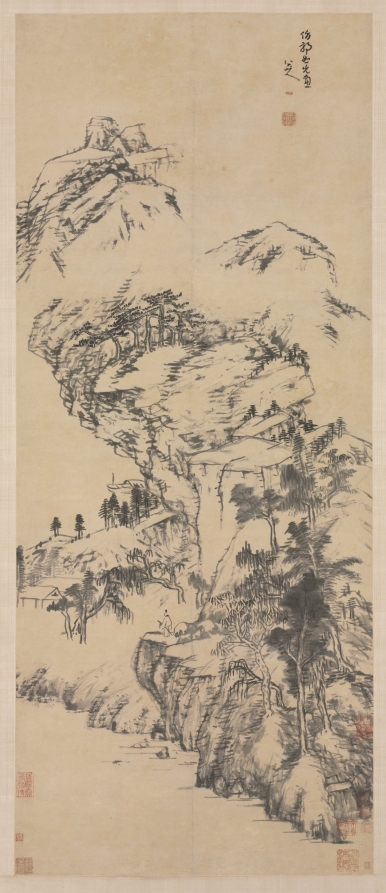
八大山人又名朱耷,馆方生卒记录为1626—1705年。CMA说明他出自明代宗室,在清朝建立后失去原有身份并曾隐身寺院;其作品以不循常规的构图与强烈的个人表达受到关注。
《鱼石图》中向上看的鱼、缺乏明确边界的水域,以及另一件晚年山水中向上密集生长的笔触,提供了不同的观看入口。馆方提出某些图像可能与遗民处境有关,但这类解释仍应保持“可能”的语气,不把每一笔都解成唯一政治暗号。
Bada Shanren, also called Zhu Da, a 17th-century painter who rejected conventions in favor of an individual, personal expression, is known for his unorthodox compositions of fish, flowers, birds, and rocks. Fish in his paintings are often looking upward toward heaven, swimming in a pond of undefined space. As a member of the Ming imperial family, Zhu Da lost his princely status and hid in a monastery when the Manchus, foreigners from the north, established the Qing dynasty in 1644. This scroll may have some autobiographical meaning, representing fish as leftover subjects ( yimin ) who lived in a void, having lost their roles in life after the fall of the dynasty.
对应《魚石圖》。查看馆方完整解说
中文介绍据馆方记录整理;观看提示为策展解读。生卒记录存在异说时以进一步考证为准。
2 件图像记录;可能包含整册与单叶,不等于同等数量的独立创作。原题与署名限定保留。