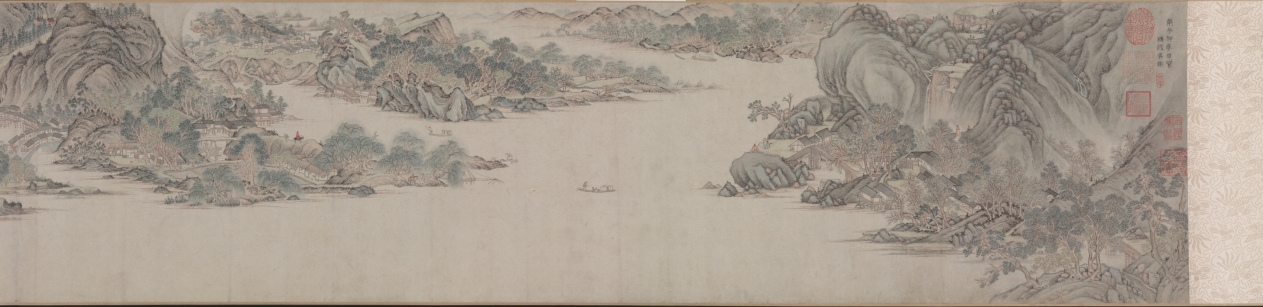
迎春圖
吳彬 · 1600
手卷 · 克利夫兰艺术博物馆 · CC0
LIFE & LANGUAGE
2 件馆藏图像记录
历史文化资料,非入驻身份
馆藏资料以“吳彬”记录这位艺术家的署名。本页并置可核验的作品、年代与馆方说明,不用推测补齐缺失的生平。
Originally from Fujian province, the artist Wu Bin moved to Nanjing by 1600 where he was affiliated as a Buddhist layman with the Qixia temple. He specialized in landscapes and Buddhist subjects.
可从作品题名、材质、形制和题跋进入观看,再结合下方馆方原文了解创作语境。已有馆方解说可供对照。
More than 66 feet long, this handscroll depicts 447 luohans , 72 attendants, and the bodhisattva of compassion at its very end. Luohans (arhats in Sanskrit), disciples of the Buddha and protectors of the Buddha’s law, possess supernatural powers and take on myriad external appearances. The amusing assortment of characters are engaged in an array of religious, secular, and miraculous activities. The painter used stylistic features borrowed from earlier artists, carefully controlled lines, and refined coloring. Wu Bin was a lay Buddhist and depicting this sort of image was part of a religious practice seeking understanding of the Buddha’s teaching.
对应《五百羅漢圖》。查看馆方完整解说
中文介绍据馆方记录整理;观看提示为策展解读。生卒记录存在异说时以进一步考证为准。
2 件图像记录;可能包含整册与单叶,不等于同等数量的独立创作。原题与署名限定保留。
